
🌿 Morphology
🌞 Growing conditions
🌍 Origin and family
🌾 Uses
Warning: Despite the care taken in writing this sheet, it is essential to cross-reference sources before using or consuming any plant. When in doubt, consult a qualified professional
Permaculture uses
Shorea macrophylla is primarily valued for its edible nuts, which are a significant source of vegetable fat. The nuts are processed to extract illipe butter, used in chocolate, cosmetics, and soap making. As a large rainforest tree, it contributes to soil health and water retention in permaculture systems, although direct garden utility is limited due to its size and habitat requirements. There are no known widely cultivated subspecies or cultivars.
Permapeople description
Light Red Meranti
Botanical description
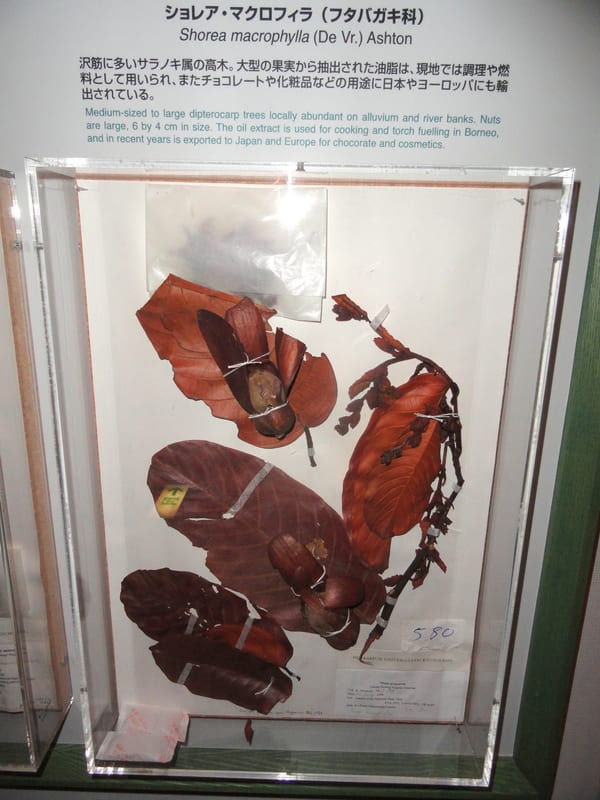
Shorea macrophylla is a large rainforest tree belonging to the Dipterocarpaceae family. It can reach heights of up to 50 meters. The tree has a straight cylindrical bole and a dense crown. The leaves are ovate-lanceolate, leathery, and dark green. The flowers are small, fragrant, and produced in panicles. The fruit is a winged nut, containing a single seed rich in oil. The bark is typically smooth and greyish-brown in color, becoming fissured with age. It is native to Borneo, specifically in swampy and alluvial soils.
Companion planting
Due to its large size and rainforest habitat, direct companion planting is not typically considered. Shorea macrophylla thrives within a diverse forest ecosystem. Interactions with other rainforest species are complex and not well-documented in a companion planting context.
Propagation methods
Propagation is primarily by seeds. Germination rates can be variable and require fresh seeds. Cuttings and grafting are possible but less common and require specialized techniques.
History and traditions
Historically, Shorea macrophylla has been a vital resource for indigenous communities in Borneo. The illipe butter extracted from its nuts has been a traditional food source and used for trade. The wood is used for construction, and parts of the tree may have had traditional medicinal applications. The harvesting of engkabang nuts is deeply rooted in the cultural practices of local communities.
Usage calendar
Flowering occurs periodically, usually following heavy rainfall events. Fruit maturation takes several months. Harvesting of nuts typically occurs during the dry season when the fruits fall naturally from the tree. Planting is best done during the rainy season to ensure adequate moisture.