
Ben-oil tree, Arabian benzoin tree, Egyptian benzoin tree, Desert Moringa
Moringa peregrina
🌿 Morphology
🌞 Growing conditions
🌍 Origin and family
🌾 Uses
Warning: Despite the care taken in writing this sheet, it is essential to cross-reference sources before using or consuming any plant. When in doubt, consult a qualified professional
Permaculture uses
The seeds are pressed for ben oil, a high-quality oil used in cooking and cosmetics. The leaves and pods are edible, offering a source of vitamins and minerals, particularly during dry seasons. The tree's drought tolerance makes it valuable in arid and semi-arid permaculture systems. It can provide shade and windbreak functions. The bark has medicinal properties, traditionally used for treating various ailments.
Permapeople description
Moringa peregrina is a tree species native to the Arabian Peninsula and the Horn of Africa. It is known for its drought resistance and edible seeds and leaves. It is used in traditional medicine.
Botanical description
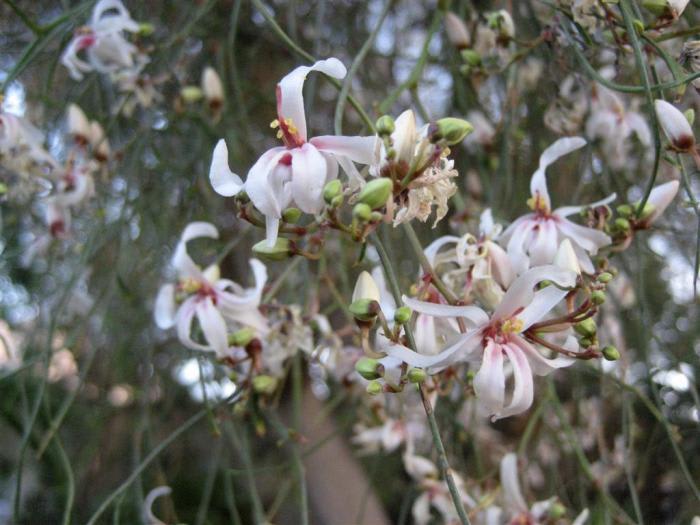
Moringa peregrina is a drought-deciduous tree belonging to the Moringaceae family. It grows up to 10 meters tall with a swollen trunk, especially at the base. The bark is smooth and greyish-white, peeling in papery flakes. The leaves are bipinnate or tripinnate, with small, oval leaflets. The flowers are fragrant and white or cream-colored, borne in panicles. The fruit is a long, slender capsule containing winged seeds. It thrives in arid and semi-arid regions, often found near watercourses. The tree is well adapted to withstand prolonged drought conditions.
Companion planting
Moringa peregrina benefits from companion planting with drought-tolerant shrubs and herbs. It can provide shade and shelter for more sensitive plants. Avoid planting it near plants that require consistently moist conditions, as it prefers dry soil. No specific antagonistic relationships are widely reported.
Propagation methods
Propagation can be achieved through seeds, stem cuttings, and root cuttings. Seeds require scarification to improve germination rates. Cuttings should be taken from mature wood and rooted in a well-draining medium. Air layering is also a feasible propagation method.
History and traditions
Historically, Moringa peregrina has been valued for its oil, used in perfumes, cosmetics, and traditional medicine. The ancient Egyptians used the oil extensively. Different parts of the tree were used for various medicinal purposes, including treating skin conditions, digestive problems, and inflammation. It also has cultural significance in some regions of the Middle East and Africa.
Usage calendar
Flowering typically occurs in spring and summer, depending on rainfall. Seed pods mature in late summer and autumn. Planting is best done in spring or early autumn. Pruning is generally done in late winter or early spring to maintain shape and promote new growth. Harvesting of leaves and pods can occur throughout the growing season.