
🌿 Morphology
🌞 Growing conditions
🌍 Origin and family
🌾 Uses
Warning: Despite the care taken in writing this sheet, it is essential to cross-reference sources before using or consuming any plant. When in doubt, consult a qualified professional
Permaculture uses
White Beebalm is an excellent pollinator attractant, especially for bees and butterflies. The leaves can be used to make herbal teas, with a flavor reminiscent of mint and oregano. It is also considered to have medicinal properties, used traditionally for its antiseptic and diaphoretic qualities. As a garden plant, it helps attract beneficial insects and can be used as a border plant.
Permapeople description
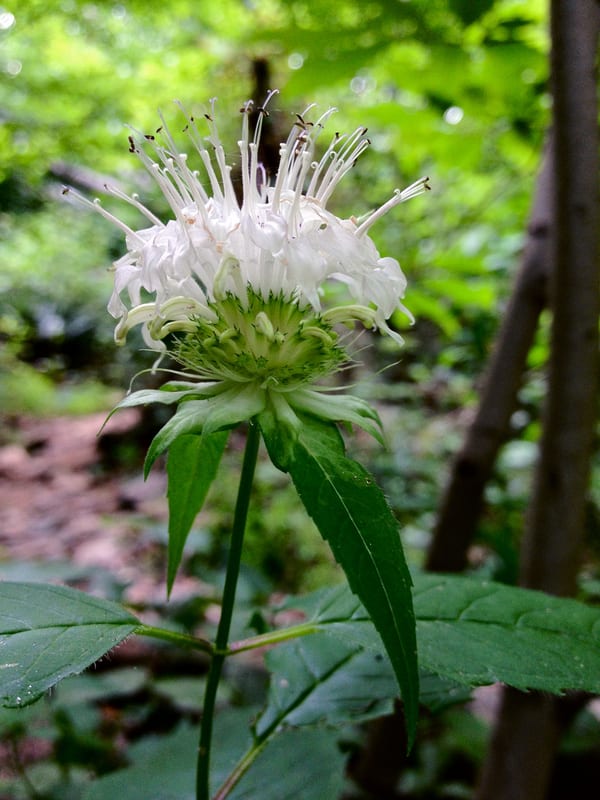
Monarda clinopodia, commonly known as White Basil-Balm, is a perennial herb native to eastern North America. It features clusters of white flowers that attract pollinators like bees and hummingbirds. It prefers moist, well-drained soil and partial shade.
Botanical description
Monarda clinopodia is an herbaceous perennial plant in the Lamiaceae (mint) family. It typically grows to a height of 2 to 4 feet and features erect, square stems. The leaves are opposite, lance-shaped, and serrated. The flowers are white or pale pink, tubular, and clustered in dense, terminal heads. The plant has a strong, minty aroma. The root system consists of rhizomes, allowing the plant to spread. It thrives in moist, well-drained soil and prefers partial shade to full sun.
Companion planting
White Beebalm is beneficial to tomatoes, as it attracts pollinators and beneficial insects. It can also be planted near fruit trees to improve pollination. Avoid planting near brassicas, as it may attract cabbage white butterflies. Generally, it is a good companion plant for many garden vegetables and herbs due to its pollinator-attracting properties.
Propagation methods
Propagation can be achieved through several methods, including seed sowing in spring or fall, division of rhizomes in spring or fall, and stem cuttings in summer.
History and traditions
Native Americans traditionally used Monarda species for medicinal purposes. The leaves were often brewed into teas to treat colds, fevers, and digestive issues. The plant was also used topically for skin infections and wounds. European settlers adopted some of these uses, and the plant continues to be valued in herbal medicine.
Usage calendar
Flowering occurs from June to August. Harvesting leaves for tea or medicinal purposes is best done before or during flowering. Planting and dividing can be done in early spring or fall. Pruning can be done after flowering to maintain shape and encourage bushier growth.