
Ephedra, Somākalpa, Ma-Huang (though this term is more commonly associated with Ephedra sinica)
Ephedra intermedia
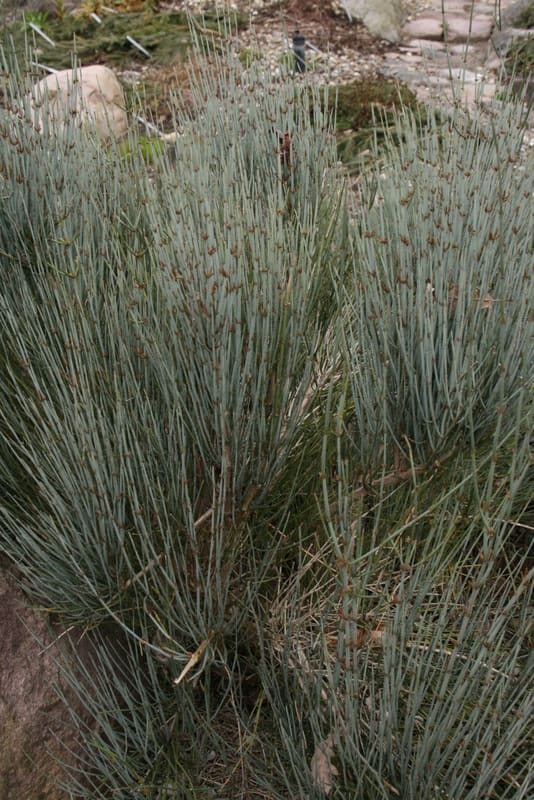
🌿 Morphology
🌞 Growing conditions
🌍 Origin and family
🌾 Uses
Warning: Despite the care taken in writing this sheet, it is essential to cross-reference sources before using or consuming any plant. When in doubt, consult a qualified professional
Permaculture uses
Ephedra intermedia has limited permaculture application due to potential toxicity and ethical considerations. It contains ephedrine and pseudoephedrine, which have stimulant and decongestant properties, but their use is regulated and requires caution. Historically, related Ephedra species have been used medicinally, but cultivation should be approached cautiously and only with a deep understanding of the plant's chemistry and legal regulations. It is generally unsuitable for home gardens due to the potential for misuse and the availability of safer alternatives for similar medicinal purposes. The plant may have some value in arid landscapes for erosion control due to its deep roots but consider the ethical implications of growing a plant with controlled substances.
Permapeople description
Ephedra intermedia is a species of Ephedra native to Central Asia and Iran. It is used in traditional Chinese medicine.
Botanical description
Ephedra intermedia is a shrub typically reaching 1-2 meters in height. It features jointed, green to blue-green stems that perform photosynthesis. Its leaves are scale-like and inconspicuous, arranged oppositely or in whorls. The plant is dioecious, meaning male and female flowers are borne on separate plants. Male cones are small and catkin-like, producing pollen. Female cones are larger and develop into fleshy, berry-like structures, usually red or orange when ripe. The plant is adapted to arid and semi-arid environments, thriving in well-drained soils and full sun. It is found across Central Asia, including parts of Iran, Afghanistan, and China.
Companion planting
Due to its xerophytic nature and medicinal properties, specific companion planting information for Ephedra intermedia is limited. It likely thrives in the company of other drought-tolerant plants adapted to arid conditions. Avoid planting near moisture-loving plants. Its allelopathic properties are not well documented, but caution should be exercised when planting near sensitive species.
Propagation methods
Ephedra intermedia can be propagated by seeds or cuttings. Seed propagation requires stratification to break dormancy. Cuttings should be taken from semi-hardwood stems in late summer or early autumn. Rooting hormones can improve the success rate of cuttings. Division is not typically practiced for this plant.
History and traditions
Ephedra species have a long history of medicinal use in traditional Chinese medicine, particularly Ephedra sinica (Ma-Huang), which is used as a stimulant and decongestant. Ephedra intermedia has been used similarly, although its usage is less documented than that of E. sinica. In some cultures, it has been used to treat asthma, hay fever, and other respiratory ailments. Historically, preparations from Ephedra species have been used as stimulants and weight loss aids, but these uses are now largely discouraged due to safety concerns.
Usage calendar
Flowering typically occurs in spring. Seed maturation and harvesting happen in late summer or early autumn. Cuttings are best taken in late summer or early autumn. Planting of seedlings is best done in spring or autumn. Pruning, if necessary, is best done in late winter or early spring before new growth begins.