
Sweet Autumn Clematis, Yam-leaved Clematis, Leather Flower
Clematis terniflora
🌿 Morphology
🌞 Growing conditions
🌍 Origin and family
🌾 Uses
Warning: Despite the care taken in writing this sheet, it is essential to cross-reference sources before using or consuming any plant. When in doubt, consult a qualified professional
Permaculture uses
Sweet Autumn Clematis is primarily used as an ornamental vine for covering structures like fences, walls, or pergolas. Its fragrant flowers attract pollinators. It can be used for erosion control on slopes due to its dense growth. While not typically considered edible, some sources suggest caution regarding potential toxicity if ingested. No specific cultivars are particularly noted for differing permaculture applications.
Permapeople description
An aggressive vine with fragrant white flowers in late summer and early fall.
Botanical description
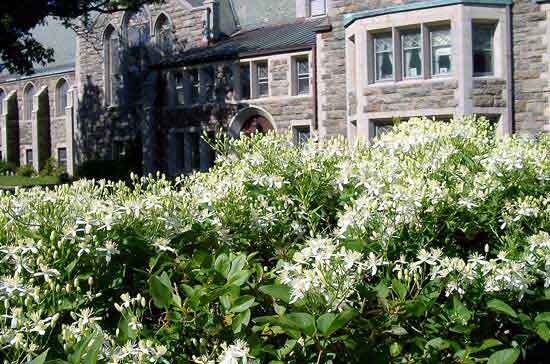
Clematis terniflora is a vigorous, deciduous, climbing vine that can reach lengths of 10 to 30 feet. It features opposite, trifoliate leaves with ovate to lanceolate leaflets. The leaflets are typically 1 to 3 inches long. The plant produces an abundance of small, star-shaped, fragrant, white flowers in late summer to fall. These flowers are followed by attractive, silvery, plume-like seed heads that persist into the winter. The stems are woody and climb by twining petioles. The plant is known for its rapid growth and ability to naturalize readily in favorable conditions. It is found mainly in USDA zones 4-9.
Companion planting
Clematis benefits from having its roots shaded, so planting low-growing companion plants around its base is beneficial. Avoid planting near plants that are easily smothered by vigorous vines. Good companion plants include those that offer shade and help retain moisture in the soil. Information on specific companion plants for Clematis terniflora is scarce but general clematis companion planting guidelines should be followed.
Propagation methods
Propagation can be achieved through seeds, stem cuttings, and layering. Seed propagation may require stratification for optimal germination. Stem cuttings are typically taken in late spring or early summer. Layering involves bending a stem to the ground and covering it with soil until roots develop.
History and traditions
Clematis terniflora is native to Japan, Korea, and China. It has been introduced to North America and other regions where it has become naturalized in some areas. Traditionally, some Clematis species have been used in herbal medicine, although information specifically for C. terniflora is limited and caution is advised. The plant's aesthetic appeal has long been appreciated in garden settings.
Usage calendar
Flowering occurs from late summer to fall (August - October). Seed collection follows flowering in fall to early winter. Planting is best done in spring or fall. Pruning can be done in late winter or early spring to remove dead or overcrowded growth and to control the vine's size.