
Scotch Bonnet pepper, Habanero pepper, Caribbean pepper, Congo pepper
Capsicum chinense
🌿 Morphology
🌞 Growing conditions
🌍 Origin and family
🌾 Uses
Warning: Despite the care taken in writing this sheet, it is essential to cross-reference sources before using or consuming any plant. When in doubt, consult a qualified professional
Permaculture uses
Fruits are edible when ripe and used as a spice; young leaves can be cooked as greens. The peppers are very hot and should be used sparingly. They attract beneficial insects and can be used as a companion plant to deter pests. Habanero types are especially popular for their unique flavor and heat. 'Madame Jeanette' is a popular cultivar known for its fruity aroma and high heat.
Permapeople description
A species of chili pepper known for its extreme pungency. It includes some of the hottest peppers in the world.
Botanical description
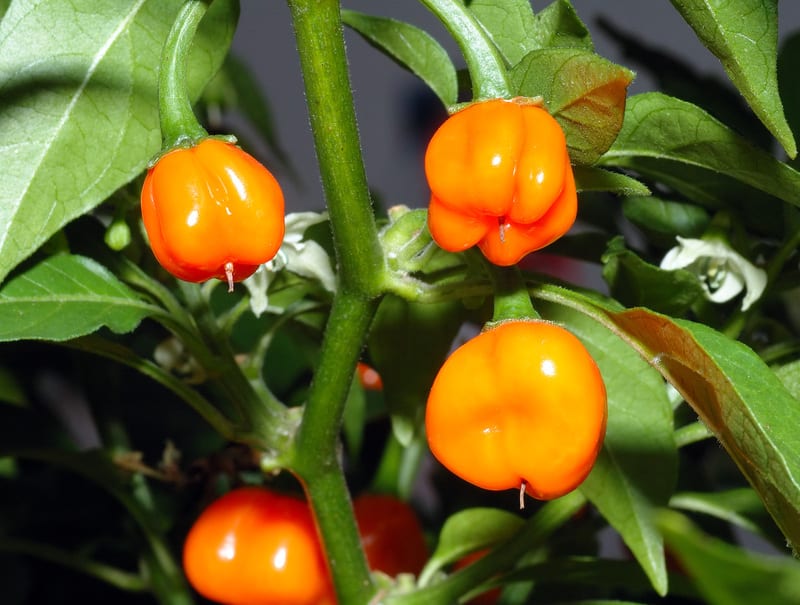
Capsicum chinense is a species of chili pepper native to the Americas. It is characterized by its distinctive lantern-shaped fruit and intense heat, ranging from 100,000 to 350,000 Scoville heat units. The plant is a perennial in tropical climates, but is often grown as an annual in temperate regions. It typically grows to a height of 1-2 meters and has ovate, glossy green leaves. Flowers are small, white or greenish-white, and are followed by the fruit, which can vary in color from green to yellow, orange, red, or brown when ripe. The fruits are often wrinkled or twisted in shape.
Companion planting
Favorable: Basil, tomatoes, carrots, onions, garlic. Unfavorable: Fennel, brassicas (cabbage, broccoli, cauliflower) may compete for nutrients.
Propagation methods
Seed sowing is the most common method. Start seeds indoors 6-8 weeks before the last expected frost. Cuttings can also be used for propagation, but are less common. Seeds require warm temperatures (25-30°C) for germination. Grafting is also possible to improve disease resistance or combine desirable traits.
History and traditions
Capsicum chinense has been cultivated in the Americas for thousands of years. It originated in the Amazon basin and spread throughout the Caribbean and Central America. Indigenous cultures used it for culinary, medicinal, and ceremonial purposes. In modern times, it is a staple ingredient in Caribbean, African, and Asian cuisines. Habaneros are popular in Yucatecan cuisine, while Scotch Bonnets are central to Jamaican jerk seasoning.
Usage calendar
Sowing: February-April (indoors). Planting: May-June (after last frost). Flowering: Summer. Harvesting: July-October. Pruning: Late winter or early spring to encourage bushier growth.