
Large Yellow Foxglove, Great Yellow Foxglove, Yellow Foxglove
Digitalis grandiflora
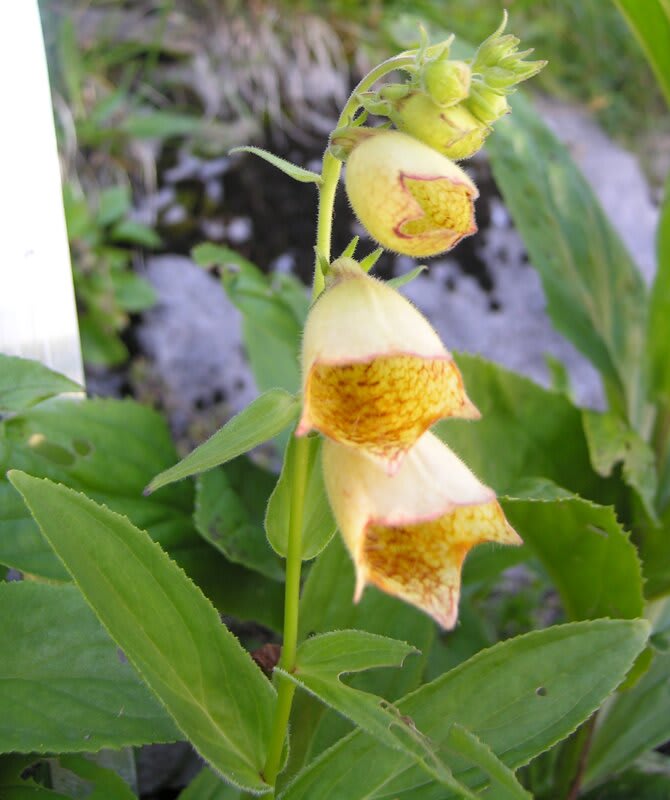
🌿 Morphology
🌞 Growing conditions
🌍 Origin and family
🌾 Uses
Warning: Despite the care taken in writing this sheet, it is essential to cross-reference sources before using or consuming any plant. When in doubt, consult a qualified professional
Permaculture uses
While traditionally used medicinally (containing cardiac glycosides), this plant is primarily valued in permaculture gardens as a beautiful and beneficial insect attractant. Its tall spikes of yellow flowers are magnets for pollinators like bees and hummingbirds. It can be used as a backdrop in herbaceous borders or as a component in woodland gardens. Use caution around livestock as it's toxic.
Permapeople description
Digitalis grandiflora, the large yellow foxglove, is a species of flowering plant in the plantain family Plantaginaceae, native to Europe and Asia. It is a perennial plant that grows to a height of 1.5 meters.
Botanical description
Digitalis grandiflora is a short-lived perennial or biennial plant belonging to the Plantaginaceae family. It typically grows to a height of 2-3 feet (60-90 cm). The plant features basal rosettes of oblong-lanceolate, slightly toothed leaves. Flowering stems bear racemes of numerous, nodding, bell-shaped, pale yellow to creamy yellow flowers, often with brown markings inside the corolla. The fruit is a capsule containing numerous small seeds. It thrives in well-drained, slightly acidic soil in partial shade to full sun, depending on the climate. It is native to Europe and Asia.
Companion planting
Digitalis grandiflora is a good companion plant for other shade-loving or woodland plants. It can be grown alongside ferns, hostas, and astilbes. Avoid planting it near plants sensitive to competition for resources, as it can become quite large. Its attractiveness to pollinators benefits the surrounding garden.
Propagation methods
Propagation is primarily achieved through seeds, which can be sown directly in the garden in spring or fall. Alternatively, seeds can be started indoors 6-8 weeks before the last frost. Division of basal rosettes in spring or fall is also possible, but less common. Self-seeding may occur in suitable conditions.
History and traditions
Historically, Digitalis species, including Digitalis grandiflora, have been used in traditional medicine, particularly for treating heart conditions. However, due to the plant's toxicity, its use requires expert knowledge and is not recommended for self-medication. The genus name 'Digitalis' comes from the Latin word 'digitus,' meaning 'finger,' referring to the ease with which a flower can fit over a fingertip.
Usage calendar
Flowering typically occurs from June to August. Seed collection can take place in late summer to early fall once the seed capsules have dried. Planting is best done in spring or fall. Pruning consists of removing spent flower spikes to encourage further blooming and prevent excessive self-seeding.