
Rocambole Garlic, Sand Leek, Giant Garlic, Purple Garlic, Serpentine Garlic, Spanish Garlic
Allium scorodoprasum
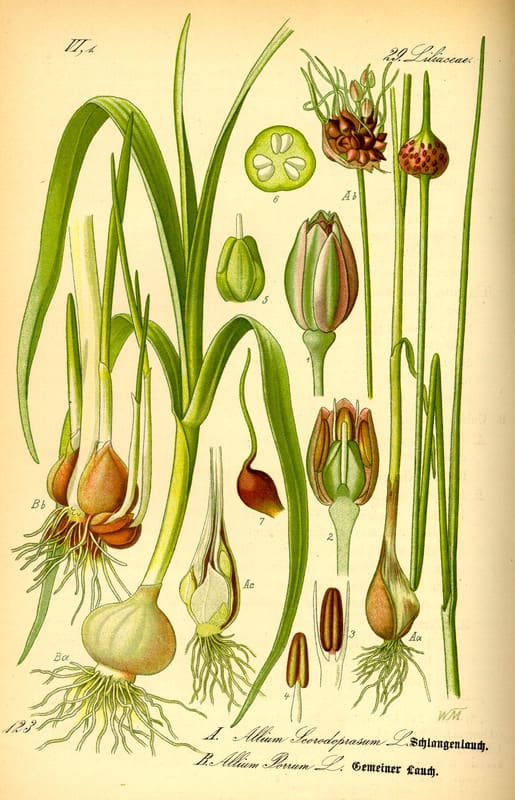
🌿 Morphology
🌞 Growing conditions
🌍 Origin and family
🌾 Uses
Warning: Despite the care taken in writing this sheet, it is essential to cross-reference sources before using or consuming any plant. When in doubt, consult a qualified professional
Permaculture uses
Rocambole garlic is primarily used for its edible bulbs and scapes, which have a strong garlic flavor. It is more cold-hardy than other garlic varieties and can be planted in fall. In the garden, it can act as a pest repellent due to its pungent smell. The bulbs can be used medicinally like other garlics for their antiseptic and cardiovascular benefits. Some cultivars exhibit greater disease resistance or unique flavor profiles.
Permapeople description
Rocambole garlic is a type of hardneck garlic (Allium scorodoprasum) known for its strong, complex flavor and easy-to-peel cloves. It is a popular choice for culinary use and is often grown in home gardens.
Botanical description
Allium scorodoprasum is a Eurasian species of wild garlic. It is a perennial plant growing from an underground bulb. The stem is erect, reaching up to 1.5 meters in height. Leaves are linear and flat. The inflorescence is a spherical umbel, often producing bulbils in addition to flowers. The flowers are typically pinkish-purple. The bulb is composed of several cloves. It prefers well-drained soil and full sun to partial shade.
Companion planting
Favorable companions include tomatoes, peppers, brassicas (cabbage family), and fruit trees. It may deter aphids, cabbage loopers, and other pests. Avoid planting near legumes like peas and beans as it can inhibit their growth.
Propagation methods
Propagation is primarily achieved through planting bulbils or cloves in the fall. Division of the bulb clusters is also possible. Seed propagation is less common but feasible.
History and traditions
Allium scorodoprasum has a long history of use in European and Asian cuisine. Historically, it was used for both culinary and medicinal purposes. Traditional uses include treating colds, coughs, and digestive ailments. In some cultures, it was believed to ward off evil spirits.
Usage calendar
Planting: Autumn. Harvesting: Summer (bulbs, scapes). Flowering: Summer. Pruning: Removal of flower stalks to encourage bulb growth.